PSYCHOLOGY · EMBODIMENT · EXPRESSION
A deeper way
of being
alive.
I’m Dr. Elizabeth Brewer.
My work lives where the wisdom of the body meets the richness of being human.

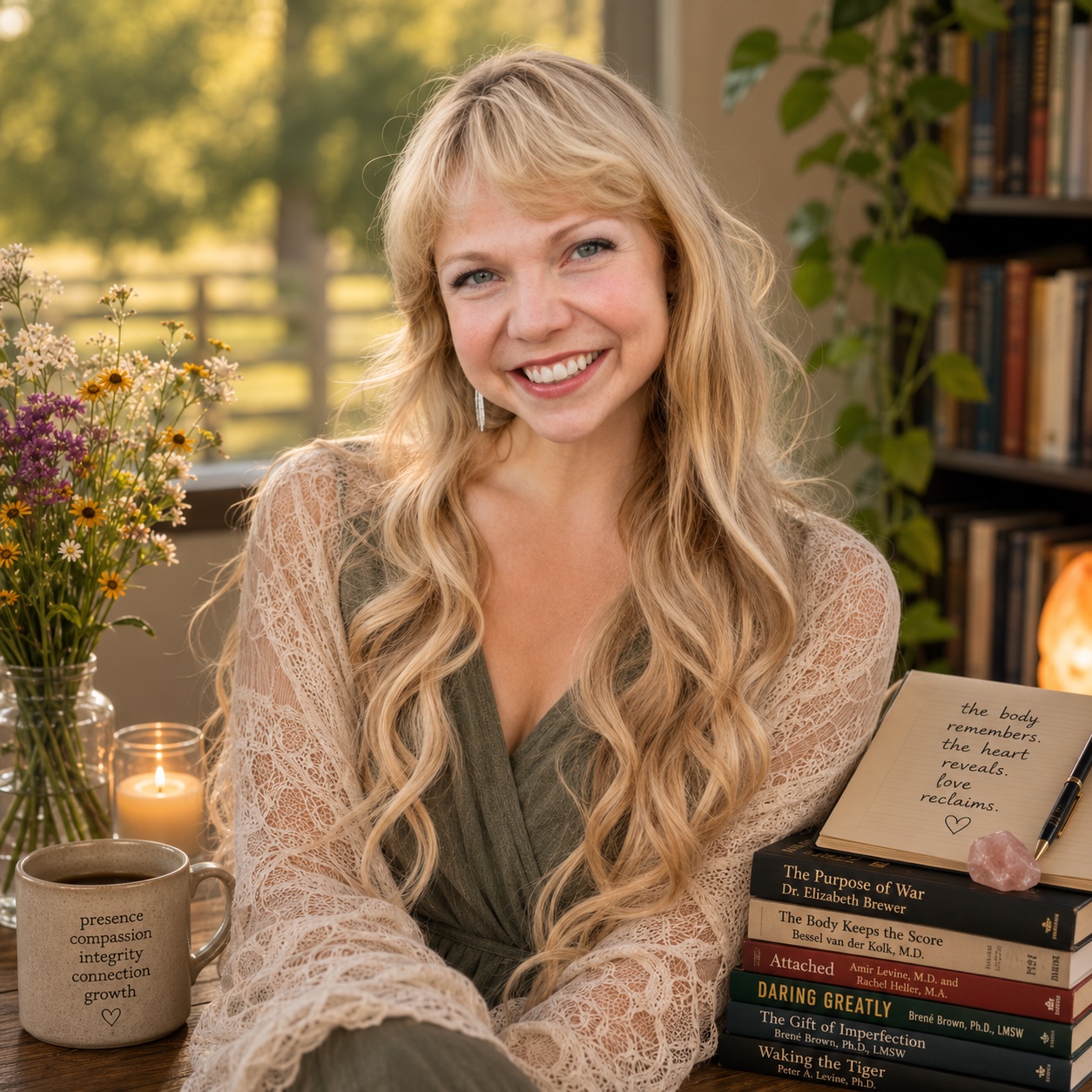
A clinician’s curiosity.
An artist’s way of seeing.
There is more
to you than
what has hurt.
I’m interested in the whole person: the stories we carry, the ways we protect ourselves, and the parts of us still waiting for room to breathe.
My path has been shaped as much by movement as by psychology. I’ve spent more than 17 years working as a movement therapist, yoga teacher, aquatic therapist, and dancer. That experience informs the way I listen.
Alongside my work with the body and mind, I teach in graduate psychology education. Across these settings, I return to the same curiosity: what becomes possible when we meet ourselves with a little more tenderness?
A BOOK BY ELIZABETH BREWER
The Purpose
of War
What Conflict Reveals in the Body, Systems, and History
Drawing on psychology, family history, poetry, and reflection, this book explores conflict within our bodies, relationships, and wider world. It asks what conflict reveals, and what becomes possible when we meet it with attention.
Read a passage
FROM “INVOCATION”
May you discover that your body carries
not only wounds, but wisdom,
and that repair is possible even in the ruins.

Something to
carry with you.
A patch of light. A remembered sound. An image that stays with you. Three small invitations to let the ordinary become a little more vivid.
A Small Encounter with Beauty
An invitation to meet one ordinary detail with a little more attention.
Choose any sense available to you. You can imagine, skip a step, or stop whenever you wish.
Find a small beginning.
Let your attention settle on one thing nearby: the curve of a cup, a patch of color, a familiar texture. Choose something easy to be with. You can also remember a place or object you enjoy.
Stay for another moment.
What becomes noticeable when you linger? An edge, a shadow, a change in temperature. Let the detail be as ordinary as it is. There is no particular feeling to find.
Let it suggest an image.
If this detail belonged in a poem, what might it become? A doorway, a small sun, a resting place. Use your own image, or simply stay with what is there.
Carry a little of it with you.
Choose one word for what you noticed. You might write it down, sketch a shape, or leave it quietly unnamed. Let the rest of the day come back into view.
For creative reflection and personal exploration.
A few words or a small drawing
What drew your attention? What surprised or moved you, if anything? You might respond in words, a shape, or a small drawing, then choose a word or image to take into your day.
Download the reflection (PDF)The World, a Little Closer
A quiet exploration of the small ways the world reaches us.
Choose any sense available to you. You can imagine, skip a step, or stop whenever you wish.
Choose a way to listen.
Notice a sound that feels comfortable to attend to. It might be distant, familiar, or very small. If sound is unavailable or unwelcome, choose a texture, a vibration, or something you can see.
Notice its character.
Is it steady or changing? Close or far away? Soft-edged or distinct? Give it a moment without needing to explain it.
Make room for a second detail.
Let another detail join the first: the contact of clothing, a change of light, the shape of something nearby. You can stay with one sense throughout.
Return in your own time.
What would you remember from this small encounter? A word or image is enough. Turn toward whatever you would like to do next.
For creative reflection and personal exploration.
Download the reflection (PDF)A Little Room for Possibility
A gentle invitation to imagine something you would like more room for.
Choose any sense available to you. You can imagine, skip a step, or stop whenever you wish.
Begin with something modest.
Think of a small pleasure you welcome, or one you are curious about. A song, a walk, a page, a conversation. A memory is welcome, too.
Give it a little detail.
Picture a moment in which it could belong. What is around you? What might you notice? You can describe the moment in words if pictures do not come easily.
Find its smallest expression.
What is one small way this could have a place in an ordinary day? A few minutes, a message, a song played once. Let it fit the life you actually have.
Leave the door open.
You can keep the idea without turning it into a task. Write a few words if you wish, or let the possibility accompany you as you go.
For creative reflection and personal exploration.
Download the reflection (PDF)